
Stage one: getting to the root of the problem

The UK's toxic age timeline
In 2023, our research found that the UK is pinning itself against a ‘toxic age timeline’, with the average person expecting to hit key life milestones a lot sooner than realistically possible. This resulted in a more unhappy and stressed nation, with nearly two-fifths (38%) of people wishing they were more successful, and over a third (34%) admitting to being too self-critical.
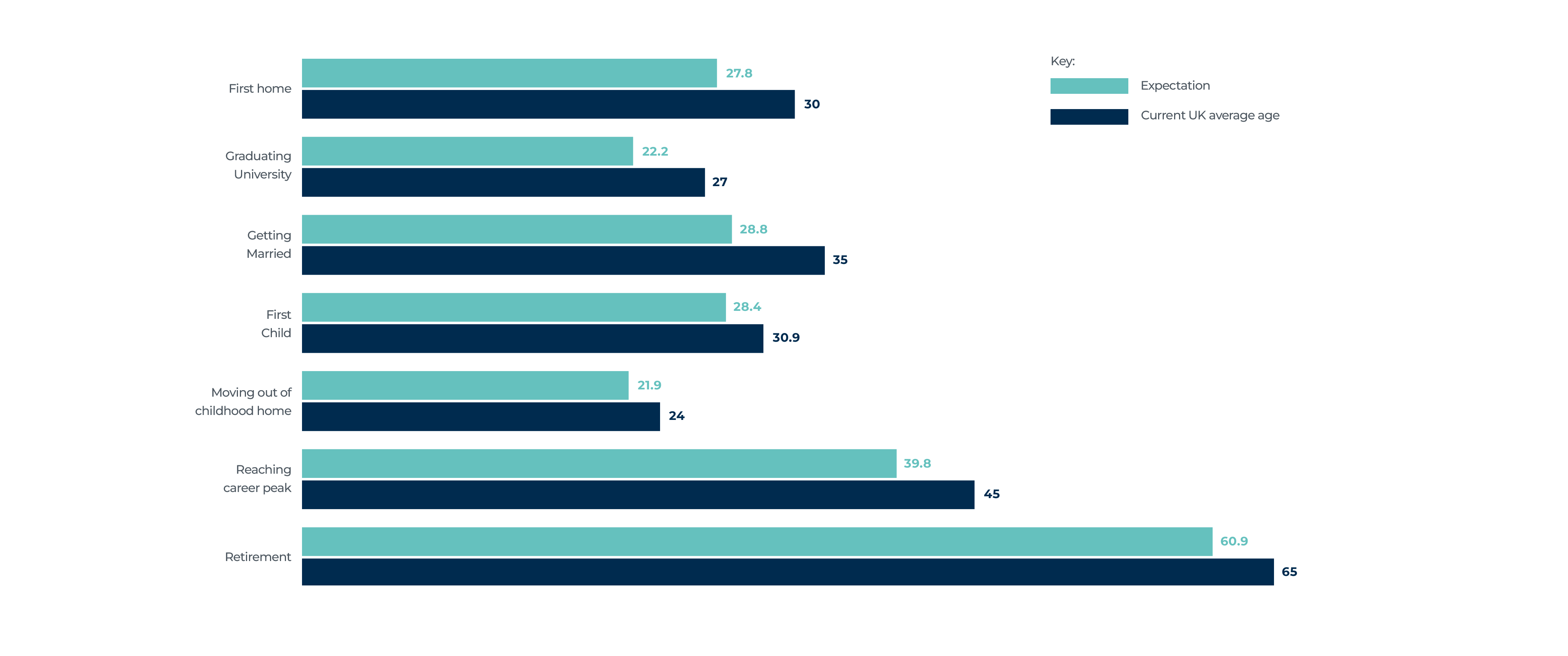
The research uncovered that, in 2023, most people believed 22 to be the age at which they should have moved out of their childhood home, and 28 to be the age where they should have purchased their first home and had their first child. However, in reality, getting on the property ladder for the first time is six years later than those expectations, at 34 years old.
But it's time to dispel the myth that we're 'too old' to hit certain life milestones. We spoke to our mature students to reveal how age is simply just a number, and that we can achieve our life goals at any age.
Average age of key life milestones
Stage two: Addressing current confidence levels
The UK’s Confidence Index
How many UK adults battle an ‘inner critic'?
We developed the UK’s first confidence index - showcasing all the factors impacting confidence across the UK and among different demographics

Stage three: Preparing for the confidence comeback

In 2025, our research revealed that UK adults are now starting to reinvent themselves after a decade of adversity, entering the confidence comeback era; with over two-thirds (68%) feeling self-confident.
The top confidence-builders sparking this renewed confidence comeback include being more financially secure (41%), being true to myself and living authentically (40%), and support from friends and family (38%). While those areas we’re still lacking in confidence include our parenting and family lives (30%), our career and professional lives (25%) and our physical appearance (21%).
To begin a confidence comeback, download the full research insights here.
Taking control and owning your confidence comeback
To help you on your confidence journey, our Head of Department of Undergraduate Psychology, Dr Ashleigh Johnstone, shares her top tips on how to build confidence, including:
- Celebrating your mistakes
- Hacks to fast-track confidence
- How to make manifestation work for you
- Integrating rejection therapy into your everyday.
Whether you've struggled with self-doubt for months or years, Dr Johnstone's advice will guide you back to believing in yourself.
She says: “At its core, confidence is a skill that can be learned, refined and expanded throughout a lifetime. The UK's evolving confidence collective shows how society is turning challenges into triumphs, by prioritising personal growth and lifelong learning.
“Whether it’s stepping out of a comfort zone, pursuing education at any stage of life or developing a kinder inner voice, the opportunities for self-reinvention are boundless.
“It's not about erasing fear but learning to act despite it. Every step forward, even the small steps, creates momentum towards a brighter, more confident future.”